Interrogation Room Video Analysis: The Defense Attorney's 2026 Guide
Key Facts
- 72% of large-agency interrogations are recorded, but only 12% limit contamination, a 2025 Duke Law report found per the Wilson Center.
- Only 14% of agencies have policies protecting vulnerable adults during interrogations, according to Duke's 2025 review of the 50 biggest jurisdictions.
- Suspect-only camera angles make jurors rate confessions as more voluntary even when interrogators look coercive, Ohio University research shows.
- In the Max Soffar case, police recorded just 2 of 26 interrogation hours and officers typed his statements, the ACLU reports.
- False confessions contributed to more than a quarter of the first 330 DNA exonerations, per the Innocence Project.
- Of 58 people exonerated of murder in 2015, 22 were convicted on false confessions, data cited by the ACLU shows.
- Public defenders carry caseloads 3 to 10 times recommended levels, per JusticeText's co-founder, making AI-assisted interrogation review a necessity.
What the 2025 Duke Policy Report Means for Your Interrogation Videos
The camera is on. That's the good news, and it's also where the good news ends. A 2025 Duke Law Wilson Center report makes clear that interrogation room video analysis can't be an afterthought in your case prep, because the policies governing what gets recorded and how are far thinner than most defenders assume.
The Duke report evaluated the 50 most populous U.S. jurisdictions and found that 72% of agencies require some electronic recording of interrogations. But the safeguards behind that number collapse fast. Only 12% of agencies have policies limiting contamination, the practice of investigators feeding non-public crime details to a suspect who then "knows" things only the perpetrator would. Only 14% protect vulnerable adults, including people with disabilities. And only 16% restrict false-evidence ploys, the "we found your DNA" bluff that courts have repeatedly tolerated.
For a defense attorney, those gaps are your roadmap. If your jurisdiction has no contamination policy, the burden falls on you to find the moment in the footage where the detail was disclosed. That means a timestamped, speaker-labeled transcript you can actually cite, not a vague memory of "somewhere in hour three." The same discipline applies when you're cross-referencing the interrogation against other recorded evidence in the file, like 911 call transcript analysis or jail call transcription, since statements made before and after the room often contradict what the report says happened inside it.
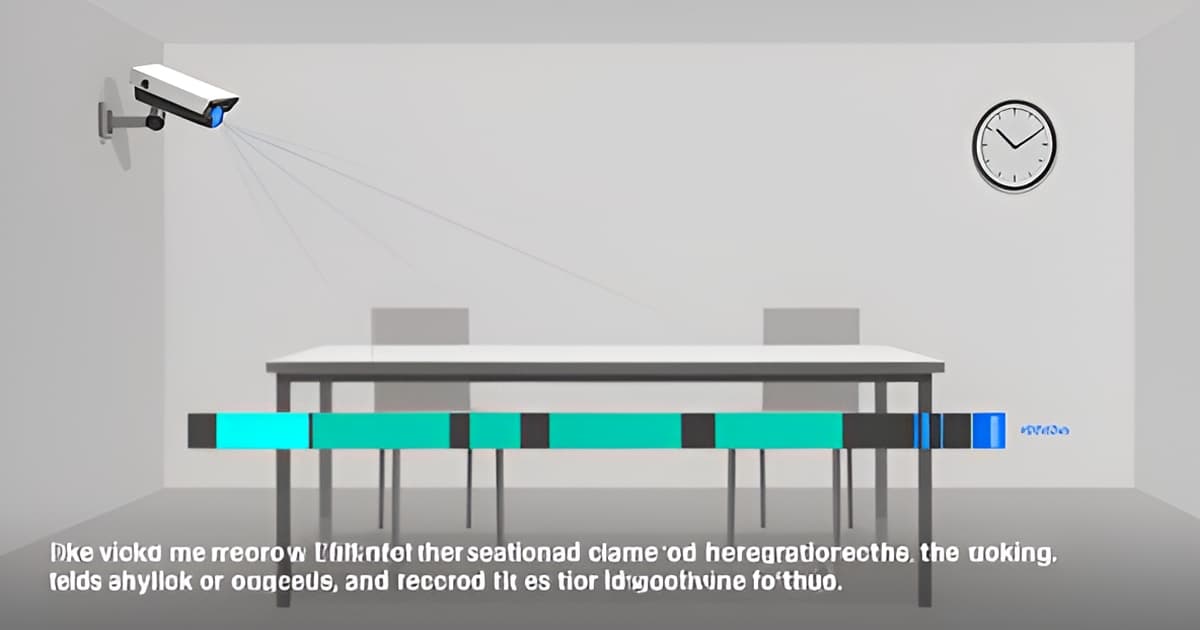
The report also echoes a problem defenders have raised for years: camera angle. When the camera frames only the suspect, with the interrogator out of view or shot from behind, research from Ohio University's G. Daniel Lassiter shows jurors are more likely to believe a statement was voluntary, even when the questioning looks coercive. The Duke report recommends a neutral angle capturing both parties in profile. Most agencies haven't adopted it, which gives you a concrete voluntariness argument if your video is suspect-only.
And incomplete recording is itself evidence. In the Max Soffar case, police audio-recorded just 2 of 26 hours of interrogation, and officers, not the suspect, typed up his statements. The ACLU's account of that case is a reminder to audit every gap, splice, and missing hour before you accept the state's version of what was said.
Your first-pass review of any interrogation video should cover:
- Camera angle: who's framed, who's hidden, and what that framing does to a voluntariness fight.
- Recording completeness: every gap, restart, and unrecorded stretch, documented with timestamps.
- Contamination: whether investigators disclosed crime details the client later "revealed."
- Vulnerability: juvenile status, cognitive impairment, or mental illness that changes how the court should read the confession.
The recording exists; the safeguards don't. That's the practical takeaway from the Duke data. With false confessions contributing to more than a quarter of the nation's DNA exonerations, per the Innocence Project, the footage is where the case is won or lost. Evidence Copilot's grounded review workflow, with every AI answer citing the exact video moment it came from, exists because that work is now unavoidable, not optional.
Camera Angle, Contamination, and the Two Bias Traps in Every Recording
Every interrogation recording carries two built-in bias traps, and both are visible in the first two minutes of playback. One distorts how a jury will read voluntariness. The other hides how the confession actually got built.
The camera angle is the first trap. When the frame centers on the suspect and the interrogator sits out of shot or with their back to the lens, research by Ohio University psychologist G. Daniel Lassiter shows jurors rate the statement as more voluntary, even when the interrogation looks coercive. Position both parties in profile and that bias disappears.
On first pass, note the camera position before you listen to a word. If the recording shows only your client's face, you have a citable defect to raise in a voluntariness or suppression challenge. The 2025 Duke Law Wilson Center report independently recommends neutral framing that captures both parties, which gives you an academic benchmark to cite alongside Lassiter's findings.
The second trap is contamination: non-public crime details that reach the suspect before the recorded segment, then show up as "guilty knowledge" on tape. Only 12% of agencies nationwide have any policy limiting contamination, and just 16% limit false-evidence ploys, so the odds favor a contaminated file. Your job is to find the moment the detail first appears and ask what preceded it.
Recording gaps make contamination invisible. In the Max Soffar case, police recorded just 2 of 26 hours of interrogation, and officers, not the suspect, typed up his statements. Two hours of tape cannot show what got said in the other twenty-four.
Build these two checks into your first-pass routine on every interrogation video:
- Camera framing: suspect-only or over-the-shoulder shot, or a neutral profile view of both parties? Note it in the file before you analyze content.
- Recording continuity: total interrogation time versus total recorded time. Any gap is a defense issue in its own right.
- Contamination scan: the first appearance of each non-public detail. Who introduced it, and at what timestamp?
- Authorship: did the suspect dictate the written statement, or did an officer type it up afterward?
Document both defects in your case file before you build the argument. A timestamped, speaker-labeled transcript gives you the spine for that work, and pairing it with 911 call transcript analysis or jail call transcription lets you cross-check what the suspect supposedly "knew" against what he actually heard before the tape rolled.
Screening for Vulnerability: Juveniles, Low IQ, and False Confession Risk
Before you watch a single frame of interrogation footage, know who's sitting in that chair. The numbers make the case for screening first: of 58 people exonerated of murder in 2015, 22 were convicted on the strength of a false confession.
That ratio isn't noise. False confessions contributed to more than a quarter of the first 330 DNA exonerations, and the Innocence Project's camera-angle research shows the bias runs deeper than the words spoken. Jurors judge voluntariness partly by where the lens points.
The Dassey profile is the one to memorize. Brendan Dassey was 16, a special education student with an IQ near 70, interrogated without a parent present. Each of those factors independently raises suggestibility; stacked together they make a coerced or contaminated statement almost predictable.
Policy data confirms the exposure. A 2025 Duke Law Wilson Center review of the 50 largest jurisdictions found only 14% of agencies have policies protecting vulnerable adults, and just 12% limit contamination, the tactic of feeding non-public crime details the suspect later "knows."
Screen for these markers before any deeper review:
- Age and developmental status: juveniles, IEP or special education history, guardianship questions
- Cognitive and mental health indicators: IQ testing, psychiatric history, medication, intoxication at the time of questioning
- Custodial posture and Miranda timing: when custody begins, when warnings land, whether an attorney or guardian is present
- Contamination markers: moments where investigators disclose case facts before the suspect "provides" them
Run this screen first because it changes everything downstream. A vulnerability finding reframes your camera-angle argument, your voluntariness motion, and your cross of the interrogating officer. It also tells you which transcript passages deserve line-by-line reading versus a skim.
Build the vulnerability picture from the whole discovery set, not just the interrogation file. Cross-reference 911 call transcript analysis for what the suspect knew before questioning, and jail call transcription for post-arrest statements about IQ, medication, or pressure during interrogation. At Evidence Copilot, auto-signals surface these candidate inconsistencies as unreviewed review signals so you see them before you ask.
Vulnerability screening is the cheapest defense argument you'll ever make, and the one courts still take seriously. Do it before you touch the timeline.
Building a Citable Transcript Spine (and What AI Can't Do)
By 2026, the working document in interrogation room video analysis is no longer the video itself. It's a timestamped, speaker-labeled transcript you can cite line by line. As one 2026 tool review puts it, the question is "no longer whether to transcribe custodial interrogations" but which tool gets you a transcript you can actually cite, with word-level timestamps and diarization you can trust.
The transcript spine matters because everything else hangs off it. Your Miranda timeline, your report-vs-video comparison, your cross-exam questions about what the detective said at minute 47, all of it needs a fixed reference point. When you quote "I didn't do anything like that" in a motion or a cross, you need the exact second it was spoken. A transcript without timestamps forces you back into the video every time, and with public defenders carrying caseloads 3 to 10 times recommended levels, per JusticeText's co-founder, that re-watching cost is real.
The AI-versus-human tradeoff is straightforward. AI transcription (vendors claim 96–99% accuracy) is the practical choice for bulk review: hours of jail calls, bodycam, and interview footage. Human transcription (99%+ guaranteed, at rates like Ditto's $1.50 per audio minute) earns its cost on the critical interrogation with overlapping speakers, poor audio, heavy accents, or a certified-transcript requirement. TechCrunch's AI editor Kyle Wiggers adds a caveat worth internalizing: transcription models "don't tend to perform equally well across different accents and languages," and AI summaries can be "off-base" because "nuance isn't exactly AI's strong suit." In an interrogation, nuance is often the whole case.
Which leads to the non-delegable part. Every serious tool on the market treats the AI transcript as a working document, not a certified court record. Verification and admissibility decisions stay with you. Before you cite a line in a suppression motion:
- Spot-check the AI's speaker labels against the video, especially where the interrogator and suspect talk over each other.
- Listen to every passage you plan to quote. The transcript is a map, not the territory.
- Check accuracy on accented speech, mumbled denials, and whispered exchanges, where AI models degrade first.
- Confirm timestamps against the recording's own clock, not just the transcript's.
This is the workflow Evidence Copilot is built around: diarized transcripts with word-level timestamps, every AI answer citing the exact video moment, and every output marked as pending human review. The same spine approach extends to adjacent evidence types. 911 call transcript analysis gives you a timestamped record to compare against the interrogation narrative, and jail call transcription captures post-arrest statements that often contradict what happened in the room. The ACLU's point after the Dassey and Soffar cases still holds: video alone isn't enough, attorneys need the time to study it. A citable transcript spine is how you buy that time back.
The Five-Pass Interrogation Review Workflow
Most defenders watch an interrogation video once, take notes, and move on. That's a mistake, because the most defensible issues in a custodial interrogation don't surface on the first viewing. They surface when you review the footage in deliberate passes, each one aimed at a different question. Here's a five-pass workflow for interrogation room video analysis that maps directly to suppression prep, cross-exam drafting, and clip extraction.
Pass 1: Camera angle. Before anything else, look at where the camera sits. When the frame focuses on the suspect and the interrogator is out of view or shot from behind, research from Ohio University's G. Daniel Lassiter shows jurors rate statements as more voluntary even when the interrogator appears coercive. The 2025 Duke Law Wilson Center report reached the same conclusion, recommending a neutral angle capturing both parties in profile. If your video is suspect-only, document it. That framing bias belongs in your voluntariness argument.
Pass 2: Gaps in the recording. Check the run time against the reported interrogation length. In the Max Soffar case, police recorded only 2 of 26 hours, and officers, not the suspect, typed up his statements. Missing footage is a suppression issue and a cross-exam issue. Note every timecode jump, audio dropout, and "recording paused" moment.
Pass 3: Contamination. Only 12% of agencies serving the 50 largest U.S. cities have policies limiting contamination, per the Duke Law report. So track whether investigators disclosed non-public crime details before the suspect "knew" them. Flag every instance where an officer feeds facts the suspect later repeats back.
Pass 4: Client vulnerability. False confessions contributed to more than a quarter of the 330 DNA exonerations tracked by the Innocence Project, and vulnerable suspects are disproportionately at risk. Brendan Dassey was a 16-year-old special education student with an IQ near 70, interrogated without a parent present. Assess age, cognitive capacity, mental health, and fatigue at each stage of the session.
Pass 5: Transcript verification. Run a timestamped, speaker-labeled transcript as your working spine, then verify it against the video. AI transcription suits bulk review; human transcription suits critical interrogations with poor audio or overlapping speakers. Admissibility decisions stay with you either way.
Each pass should feed a concrete work product:
- Passes 1 and 2 feed your motion to suppress outline, with both sides quoted and cited.
- Passes 3 and 4 feed cross-exam questions, each tied to a specific quoted moment.
- Pass 5 feeds clip extraction, so your exhibits are cut from verified transcript moments, not memory.
This is exactly what Evidence Copilot's Miranda Timeline and Suppression Motion Prep playbooks are built around: timestamped diarized transcripts, auto-flagged inconsistencies between the police report and the video, and suggested cross-exam questions that each cite a quoted source. The same grounded-review approach applies across your case, whether you're running 911 call transcript analysis or jail call transcription alongside the interrogation footage.
If you want to see this five-pass workflow run against real footage, book a 20-minute walkthrough at evidencecopilot.com/book. No pressure, no pitch, just the workflow.
Frequently Asked Questions
Do police have to record the whole interrogation, or can there be gaps?
Does camera angle in the interrogation room actually matter for the defense?
What is contamination in an interrogation, and how do I spot it in the video?
How common are false confessions, really?
Can I just use AI transcription for interrogation footage, or do I need a human transcript?
My client is a juvenile with an IEP, does that change how I review the interrogation video?
The Tape Doesn't Argue for Itself, You Do
Interrogation room video analysis in 2026 comes down to a discipline, not a tool: check the camera angle before you listen, audit every gap in the recording, trace each non-public detail back to the moment it was fed to your client, screen for vulnerability before you build the timeline, and anchor everything to a timestamped, speaker-labeled transcript you've verified yourself. The Duke data makes clear the state won't do this for you, 72% of agencies record, but only 12% limit contamination and only 14% protect vulnerable adults. The recording exists; the safeguards don't. So the workflow is yours to run, and with defender caseloads at 3 to 10 times recommended levels, the practical question is how to run it without re-watching hour three every time you draft a cross. Evidence Copilot was built for exactly that: every AI answer cites the exact video moment it came from, and every output stays marked as pending your review, the judgment never leaves your hands. If you want to see the five-pass workflow run against real footage, book a 20-minute walkthrough at evidencecopilot.com/book. No pitch, just the process.