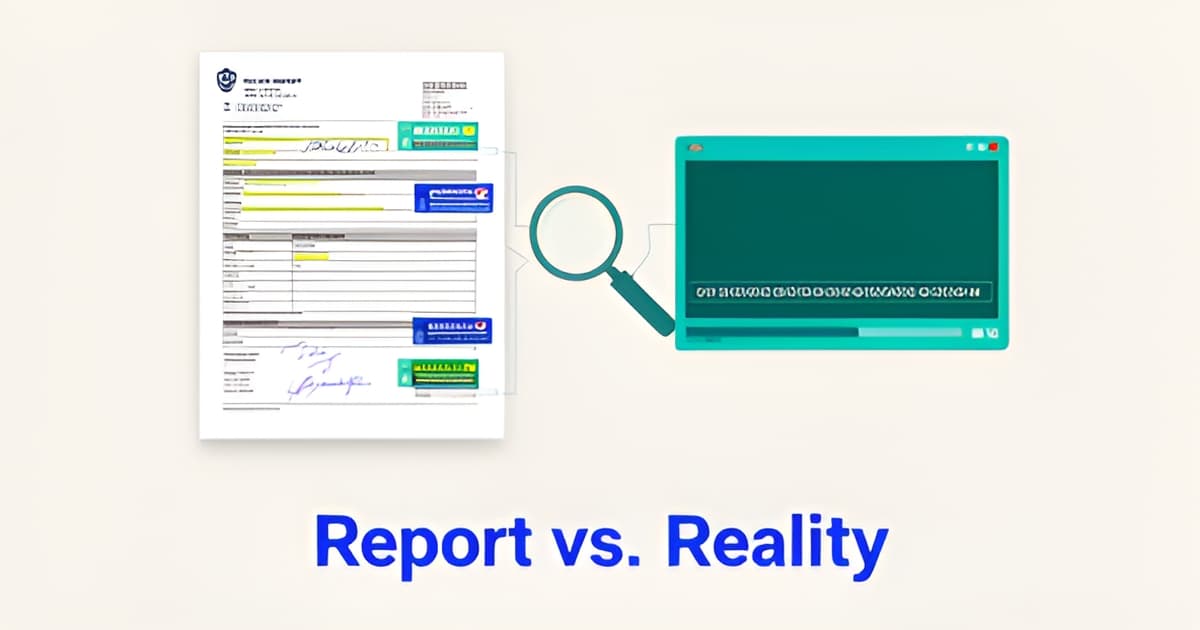
Police Report Discrepancy: The Defense Attorney's 2026 Guide
Key Facts
- A peer-reviewed study of more than 1,500 participants found report-vs-bodycam discrepancies make officers seem less trustworthy and less accurate according to CUNY research.
- Public defenders across 20 states already use AI-assisted video review to handle hundreds of hours of annual discovery per NLADA Learning Lab.
- Oakland, running bodycams since 2010, prohibits officers from viewing footage before statements in Level 1 use-of-force cases the ACLU reports.
- The Los Angeles Sheriff's Department requires deputies to file reports before viewing jail video according to ACLU policy analysis.
- Police report discrepancies usually reflect interpretation, not fabrication, making them credibility issues rather than dismissal grounds per Ohio OVI practitioner analysis.
- NACDL began training defenders to challenge AI-generated police reports, covering accuracy, bias, and Fourth Amendment issues per its session listing.
- Lead researcher Kris-Ann S. Anderson found people overvalue a perfect match between memory and bodycam footage, even though science says it rarely exists in the Applied Cognitive Psychology study.
Why the Report Never Matches the Bodycam (and Why That's Your Opening)
Every defender who has queued up bodycam footage with the report open in another window knows the feeling: the two documents describe different traffic stops. The report says "slurred speech and poor coordination." The video shows a calm driver answering questions coherently. That gap is where your defense lives, and understanding why it exists tells you how to use it.
A police report isn't a transcript. It's a post-event summary written to condense an investigation and establish probable cause, while the footage captures what actually happened in real time: timing, tone, pauses, lighting, and the overall feel of the interaction. As one Ohio OVI practitioner analysis explains, officers write these reports after long shifts, based on interpretations formed during stressful roadside encounters. A police report discrepancy often reflects interpretation rather than fabrication, which is exactly why it's a credibility issue and not automatic grounds for dismissal.
That framing matters tactically. If you stand up in court and call the officer a liar, you lose. If you attack the written conclusions instead, you win the argument the report was actually making: that the officer's perceptions support probable cause.
A peer-reviewed study of more than 1,500 participants, published in Applied Cognitive Psychology, found that when reports diverge from footage, people rate officers as less trustworthy and less accurate, and in some cases more deserving of charges. The lead researcher, Kris-Ann S. Anderson, noted that people "tend to overvalue a match between [memory and body-worn cameras], even when such a match is unlikely." Jurors expect a perfect correspondence that memory science says doesn't exist. Your job is to show the gaps and let the jury draw the credibility conclusion themselves.
Where to look for those gaps in your own discovery:
- Report conclusions on demeanor ("slurred," "unsteady") versus what the footage actually shows.
- Field sobriety "clues" stripped of context: confusing instructions, uneven pavement, poor lighting, weather.
- Signs the officer formed an early suspicion and interpreted everything afterward through that lens.
The Ohio analysis is blunt about the payoff: inconsistencies don't automatically mean the officer lied or that the case gets dismissed, but they can become extremely important to the defense. Attack the officer's written conclusions, not the officer's honesty. The question on cross is never "why did you lie?" It's "you wrote X at 2 a.m. after your shift; the camera recorded Y; which one is the accurate record of what happened?"
Finding those contradictions across hundreds of hours of annual discovery is the bottleneck, and defenders in 20 states are already using AI-assisted video review to surface them. Evidence Copilot approaches the same problem from the evidence side: its AI police report analysis compares each new file against everything already in the case and flags candidate report-vs-bodycam inconsistencies on ingest, with citations to the exact moment. Every flag is marked AI-generated and pending your review, because the credibility call is yours. You can see Evidence Copilot pricing on the site, published, with no sales wall.
The gap between the report and the footage isn't a gift. It's an opening you have to walk through deliberately.
Did the Officer Watch the Video Before Writing? The Policy Split You Can Use
Every cross of a report against bodycam footage eventually hits a policy question most defenders never ask on the record: did the officer watch the video before writing the report? The answer matters, because a police report discrepancy reads very differently when the officer wrote it with fresh footage sitting on the desk beside the keyboard.
This is a live policy debate, not settled practice. Departments nationwide differ on whether officers may consult footage before submitting reports, according to research from the CUNY Graduate Center. That variance is your opening: the policy is a discoverable fact, and the officer's answer to "did you view the footage first?" is a sworn one.
The ACLU's position, laid out by Jay Stanley and Peter Bibring, gives you six reasons pre-report viewing is a problem. In their argument against pre-report viewing, they contend it is poor investigative practice, that departments don't extend the "accuracy" rationale to other suspects, that it enables tailoring, that it undermines investigative legitimacy, that it cross-contaminates memory, and that it impedes the search for truth. Their proposed alternative is simple: the officer gives an initial statement first, then views video and offers corrections. They also warn that permitting pre-viewing "risks turning police body cameras from tools for police accountability into tools for police coverup."
Law enforcement groups see it the other way. The Police Executive Research Forum argues that even trained observers may have trouble recalling events accurately in stressful situations like shootings, which is precisely why officers should be allowed to review video first. The Los Angeles County Office of Independent Review found, in its review of available research, "ample evidence that seeing additional information than what was experienced can alter the memory of an event." Both sides agree memory is fragile; they disagree about whose problem that should be.
The departmental split gives you concrete precedents to name in cross. Oakland, which has run body cameras since 2010, longer than most departments, prohibits pre-statement video review in Level 1 use-of-force investigations. The Los Angeles Sheriff's Department requires deputies to file reports before viewing jail video. If the officer's own agency has no such rule, that fact itself becomes fair game: the report was written under a policy that permits viewing, so the jury can weigh what that means for the account's independence.
Your cross-examination sequence writes itself:
- Establish the department's written policy on pre-report footage review.
- Get the officer to admit whether they viewed the footage before drafting the report.
- Pin down the timing: when the camera was activated, when the report was written, and what fell in between.
- Contrast the treatment with any civilian witness, who got no video before their statement.
Frame the payoff carefully. Discrepancies are credibility and interpretation disputes, not automatic proof of dishonesty, and the CUNY study of 1,500+ participants found the public actually prefers officers write accounts before viewing footage. But that same study found people rate officers as less trustworthy and less accurate when reports diverge from footage. If the officer watched the video first and the report still misses what the camera caught, the "memory is unreliable under stress" defense collapses on its own weight.
When you're working through hundreds of hours of discovery each year, surfacing these report-versus-bodycam gaps before the hearing is the hard part. Tools like AI police report analysis flag candidate inconsistencies on ingest, and Evidence Copilot pricing is published at $39/user/mo for solo practitioners, so the workflow doesn't require a firm budget. Every flagged signal still needs your judgment; the tool just makes sure the timing question gets asked.
The Discrepancy Checklist: What to Compare, Line by Line
You hold the police report in one hand and the bodycam footage in the other. The gap between them is where your case is won or lost.
Police reports are post-event summaries designed to condense an investigation. Footage, however, captures real-time elements like tone, pauses, and lighting. This structural difference explains why a report might claim "slurred speech" while the video shows a calm, coherent driver. Practitioner analyses note that these discrepancies often reflect interpretation rather than intentional fabrication. You must treat them as credibility issues, not automatic proof of perjury.
When you compare the documents, look for specific mismatches. A report lists "clues" without context. The footage reveals the reality of the situation.
- Tone and Pauses: Does the officer’s written description of "agitation" match the driver’s actual voice pitch and breathing on camera?
- Lighting and Environment: Did poor visibility or uneven pavement make field sobriety tests appear failed when they were actually just difficult?
- Instruction Quality: Did the officer give confusing directions, or did the driver fail to understand the test parameters?
- Confirmation Bias: Did the officer decide on impairment early and interpret every subsequent action through that lens?
Confirmation bias is a critical angle. Footage can reveal if the officer suspected impairment before the stop even began. If the report ignores the officer’s early assumptions, you have a strong cross-examination point.
Research supports the weight of this discrepancy. A peer-reviewed study involving over 1,500 participants found that when reports diverge from footage, the public rates officers as less trustworthy. People tend to overvalue a match between memory and video, even when such a match is unlikely. This perception gap is your leverage in the courtroom.
Reviewing hundreds of hours of digital discovery is a heavy burden. Public defenders across 20 states are adopting AI tools to manage this volume. Industry reports confirm that AI-assisted review is becoming a standard workflow for challenging police narratives.
Tools like AI police report analysis help you surface these candidate inconsistencies automatically. Evidence Copilot compares new files against earlier evidence in your case. It flags potential report-versus-bodycam gaps before you even ask. This ensures you catch every nuance in tone and timing.
You don't need to guess where the discrepancies lie. You need a systematic, line-by-line comparison. Use the footage to test the report's conclusions. If the officer wrote "poor coordination," check the video for uneven pavement. If the report claims "resistance," listen for the tone of the voice.
This workflow turns static documents into dynamic evidence. It shifts the focus from the officer's written word to the objective record. That shift is often enough to undermine the prosecution's theory.
Start your review with the checklist above. Let the footage tell the real story.
AI-Generated Police Reports: The New 2026 Frontier
The next wave of police report discrepancy problems won't come from an officer's faulty memory. It will come from a language model. NACDL has already responded: the association hosted a session titled "Decoding AI-Generated Police Reports," presented by Professor Maneka Sinha of the University of Maryland School of Law, to equip defense lawyers to scrutinize and challenge machine-drafted reports source.
This is why a 2026 guide, and not a 2024 one. The training covered three fronts that every defender should have on radar:
- Accuracy. AI-drafted narratives can state facts the underlying evidence doesn't support, and they'll do it in confident, polished prose that reads better than any human officer ever wrote on a night shift.
- Bias. Machine-generated reports can carry the same confirmation problems you already hunt for in human writing, except the assumptions are baked in before any officer reviews the output.
- Fourth Amendment implications. If a report supporting probable cause is machine-drafted, the traditional assumptions about what the reporting officer perceived and believed deserve harder questioning.
Here's the practical problem. A polished AI-generated report is more persuasive on its face, not less. It will have clean chronology, consistent terminology, and none of the rough edges that used to signal a hasty write-up. That makes the gap between the report and the raw footage more important, because the footage is now the only witness that wasn't drafted.
The research on human-drafted reports already shows why. A peer-reviewed study of more than 1,500 participants found that the public rates officers as less trustworthy and less accurate when reports diverge from bodycam footage source. An AI-drafted report doesn't change that dynamic. It raises the stakes, because the report will look authoritative while the discrepancy hides underneath.
So the checklist earlier in this guide matters more, not less. You still compare the report's conclusions against tone, pauses, lighting, and instruction quality in the footage. You still ask what the officer viewed before signing off. You just add a new question: who or what actually wrote this?
On the defense side, the same technology works for you, with the right guardrails. Tools like Evidence Copilot run AI police report analysis that flags candidate inconsistencies between the report and the bodycam on ingest, with every output cited to the exact moment in the footage and marked for human review. If you're weighing that workflow, Evidence Copilot pricing is published openly, from a $39 solo tier up through public-defender office plans.
The machine-drafted police report is coming whether defenders are ready or not. NACDL's training is the signal that the defense bar is getting ready.
Finding Discrepancies at Scale: When the Discovery Dump Is 40 Hours Deep
A single felony case can hand you 40 hours of bodycam before your preliminary hearing. Multiply that across a caseload and you're looking at hundreds of hours of digital discovery a year, which is exactly why public defenders in 20 states have already folded AI-assisted review into their workflow, according to an NLADA Learning Lab training. The question in 2026 isn't whether to use software. It's whether the software grounds its answers.
The old workflow was linear: read the report, watch the footage, hope you remember where they diverge. Grounded AI police report analysis flips the order. When a new file lands in Evidence Copilot, auto-signals on ingest compare it against evidence already in the case, and candidate report-vs-bodycam inconsistencies surface as unreviewed review signals before anyone asks a question. You open the case Monday morning and the candidate discrepancies are already queued.
That matters because the report is a post-event summary while footage captures real-time elements like timing, tone, and lighting, a structural gap that Ohio OVI practitioners note explains why a report can claim "slurred speech" while the video shows a calm, coherent driver. A machine comparison catches those gaps at scale.
Each signal carries both sides quoted: what the report says, what the transcript says. From there you can generate a cross-exam draft with suggested questions only, every question tied to a quoted source, saved as an attorney-review note. No credibility conclusions, because the tool doesn't make them and you shouldn't outsource that judgment anyway.
What grounded review looks like in practice:
- Every AI answer cites the exact video second or PDF page it came from, so you can verify before you rely on it.
- Timestamped, diarized transcripts let you search "field sobriety test" and land on the moment, not a 40-minute scrub bar.
- OCR turns scanned reports and photo evidence into searchable, citable text with page-level citations.
- Every output is marked AI-generated and pending human review; originals stay immutable.
And keep the framing discipline the research demands: a peer-reviewed study of more than 1,500 participants found discrepancies damage officer credibility, but they don't prove dishonesty. Build the cross on interpretation, not accusation.
Pricing is published, with no sales wall: Solo runs $39/user/month with 15 processing hours, Firm is $99 with 60, and PD Office is $750/attorney/year with 100 hours. Full Evidence Copilot pricing is on the site, overage is hard-capped so runaway intake can't overbill, and every plan includes the whole workspace. If you want to see the ingest-to-signal flow on a real case, book a 20-minute walkthrough at evidencecopilot.com/book, or just start on Solo and feed it your next dump.
Frequently Asked Questions
If the police report doesn't match the bodycam footage, does my case get dismissed?
Why do police reports so often say something different from what the video shows?
Can a report-vs-bodycam mismatch actually hurt the officer in front of a jury?
Did the officer watch the bodycam video before writing the report, and does that matter?
What specific things should a defense attorney compare between the report and the footage?
How do defenders find these discrepancies when a case comes with 40 hours of bodycam?
The Gap Is the Case: Your Next Move
Every police report discrepancy you've read about here comes down to one discipline: attack the written conclusions, never the officer's honesty, and let the jury weigh what the camera actually recorded. The research is on your side, a peer-reviewed study of more than 1,500 participants found that when reports diverge from footage, the public rates officers as less trustworthy and less accurate. Your next hearing file deserves the full treatment: pull the department's pre-report viewing policy, run the line-by-line checklist against tone, lighting, and instruction quality, and ask who, or what, actually drafted the report. The bottleneck is finding the gaps inside 40 hours of discovery before the preliminary hearing. Evidence Copilot's AI police report analysis flags candidate report-vs-bodycam inconsistencies on ingest, every one cited to the exact moment and marked for your review. If that workflow fits your practice, Evidence Copilot pricing is published with no sales wall, or book a 20-minute walkthrough and see the ingest-to-signal flow on a real case.